
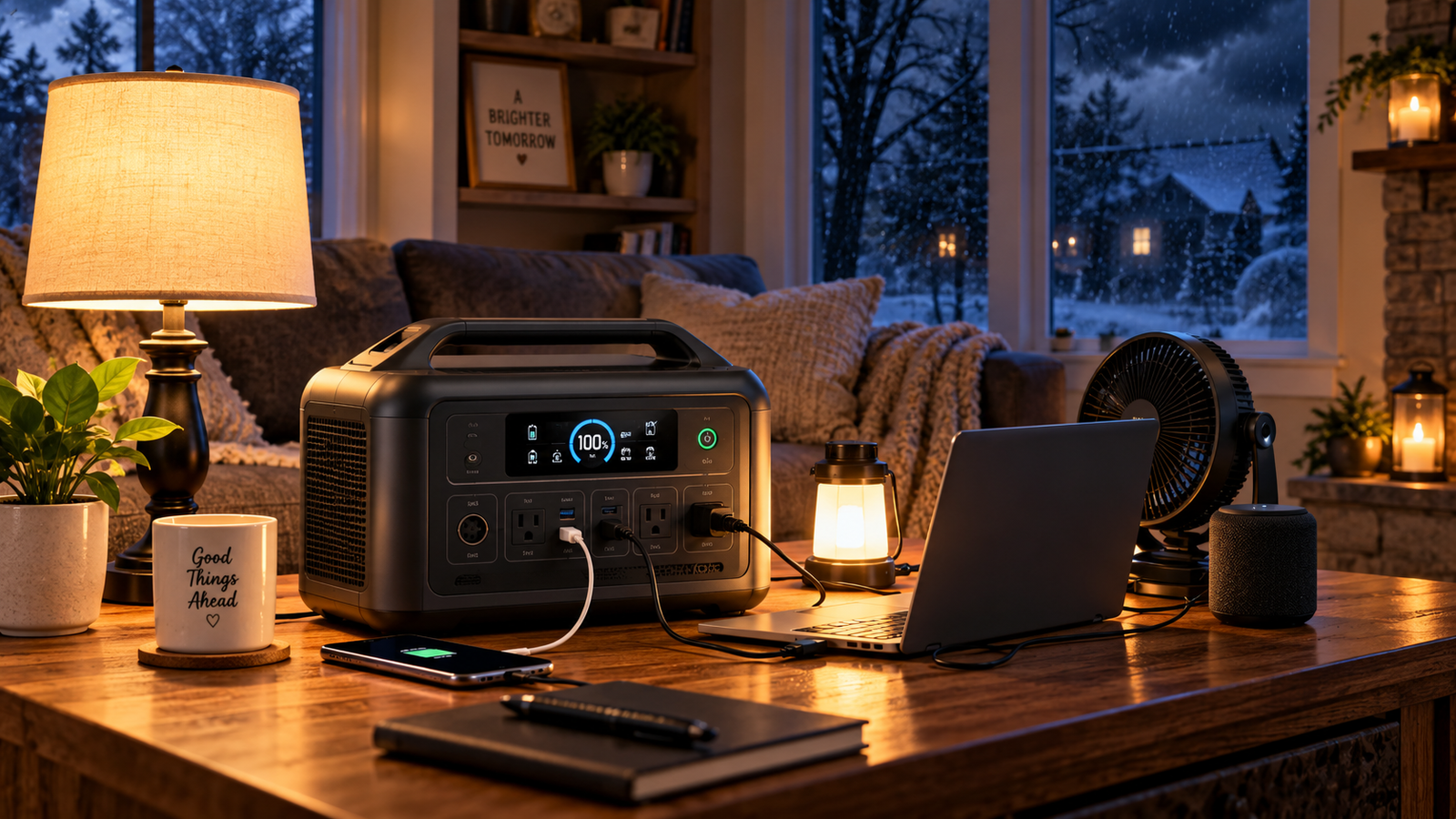
Finding the best portable power stations can be confusing, especially when models vary so much in battery capacity, power output, charging speed, portability, and price. We compared popular options for home backup, power outages, camping, RV use, and everyday portable power, looking closely at performance, battery technology, useful features, independent testing, buyer feedback, and overall value. These five VeraSort picks range from compact 1,000Wh-class models to larger-capacity systems designed to keep more of your essentials running when dependable portable power matters most. Shoppers may also know these products as battery generators, portable battery generators, or backup power sources. Unlike traditional fuel-powered generators, portable power stations store electricity in rechargeable batteries, providing convenient backup power without gasoline.
Our Best Portable Power Station Picks for 2026
Best Overall: Anker SOLIX C1000 Gen 2
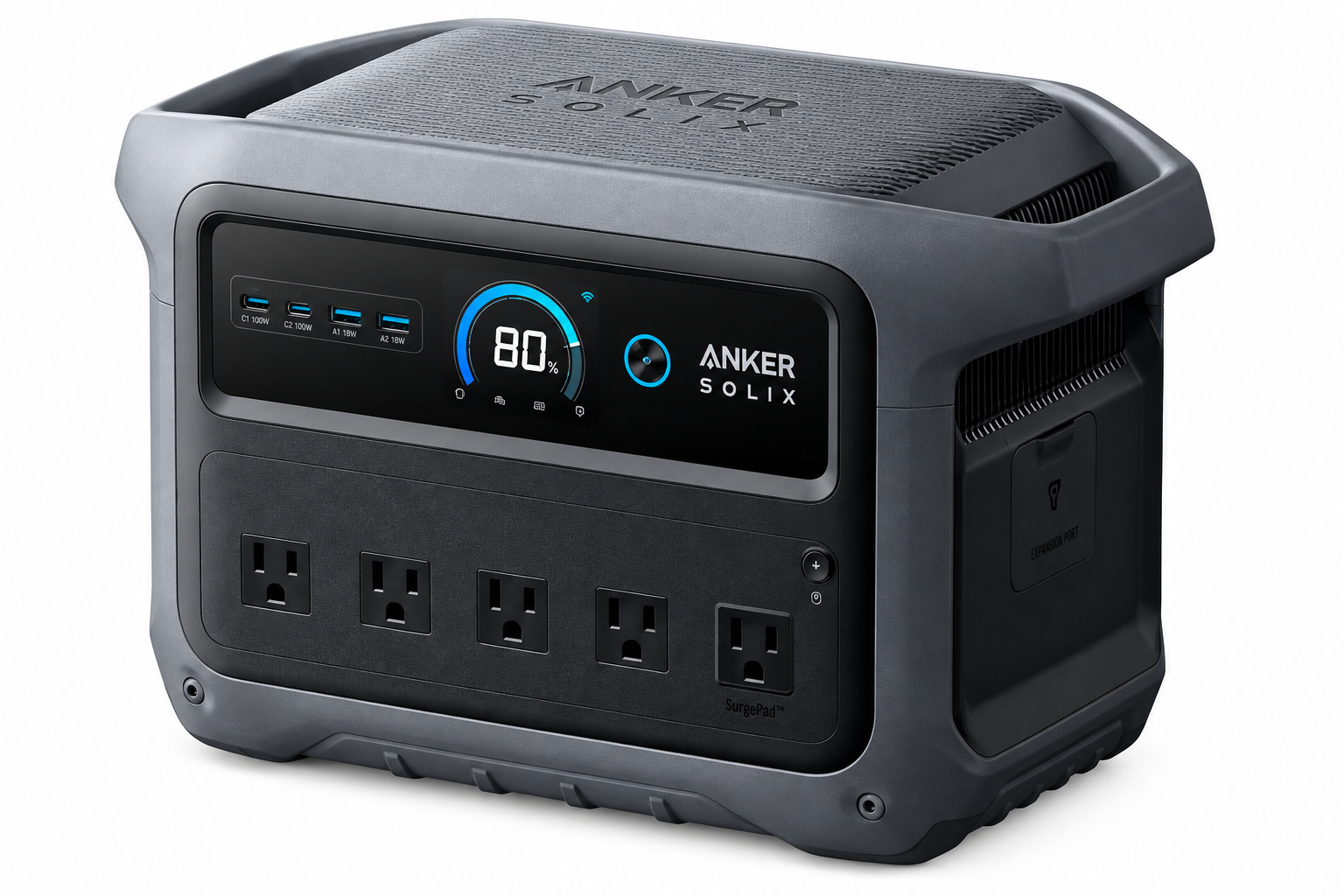
The Anker SOLIX C1000 Gen 2 earns our Best Overall pick because it delivers an excellent balance of power, capacity, charging speed, portability, and value. Its 1,024Wh LiFePO4 battery and 2,000W AC output give it enough muscle for many household essentials, camping equipment, tools, and electronics, while remaining compact enough to move where you need it.
Why we like it: The C1000 Gen 2 stands out for how much performance Anker fits into a roughly 1,000Wh power station. Independent testing has praised its combination of usable battery capacity, strong output, portability, and fast recharging. Anker rates it for a full AC recharge in as little as 49 minutes under its fastest charging mode, which can be especially useful when you have limited time to recharge between outages or trips.
Keep in mind: With 1,024Wh of capacity, the C1000 Gen 2 is better suited to running selected essentials than serving as a whole-home backup system for an extended outage. Independent testing has also noted that its cooling fans can become noticeable under heavier loads. Shoppers who need substantially more stored energy for longer outages may be better served by one of our larger-capacity picks below.
Check Price on AmazonBest for Home Backup: Anker SOLIX S2000
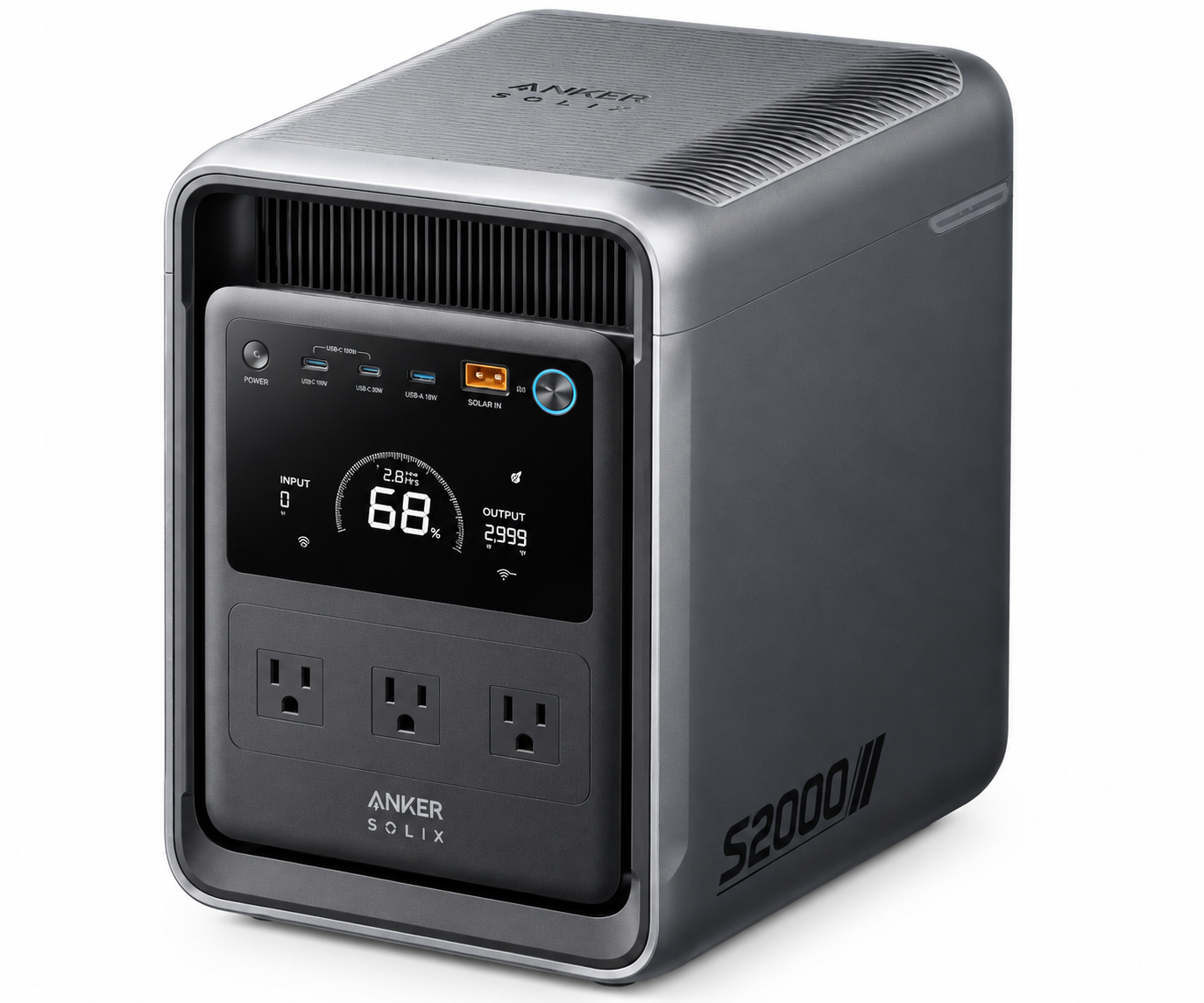
The Anker SOLIX S2000 earns our Best for Home Backup pick because its 2,010Wh LiFePO4 battery provides substantially more stored energy than the smaller 1,000Wh-class models in our lineup. That extra capacity makes it better suited to keeping essentials such as refrigerators, lights, communications equipment, and other important devices running during a power outage.
Why we like it: Capacity is the big attraction here. With 2,010Wh available, the S2000 gives households considerably more breathing room during an outage while still remaining a self-contained portable power station. Its LiFePO4 battery, UPS capability, solar-charging support, and strong recent buyer activity also make it an appealing option for people who want emergency backup without stepping up to a much larger whole-home battery system.
Keep in mind: The extra capacity comes with extra size and weight, so the S2000 is less convenient to carry around than our smaller picks. It also provides backup power for selected appliances and devices rather than functioning as a permanent whole-home generator. If portability matters more than maximum runtime, one of the lighter 1,000Wh-class models below may be a better fit.
Check Price on AmazonBest Value: BLUETTI Elite 100 V2
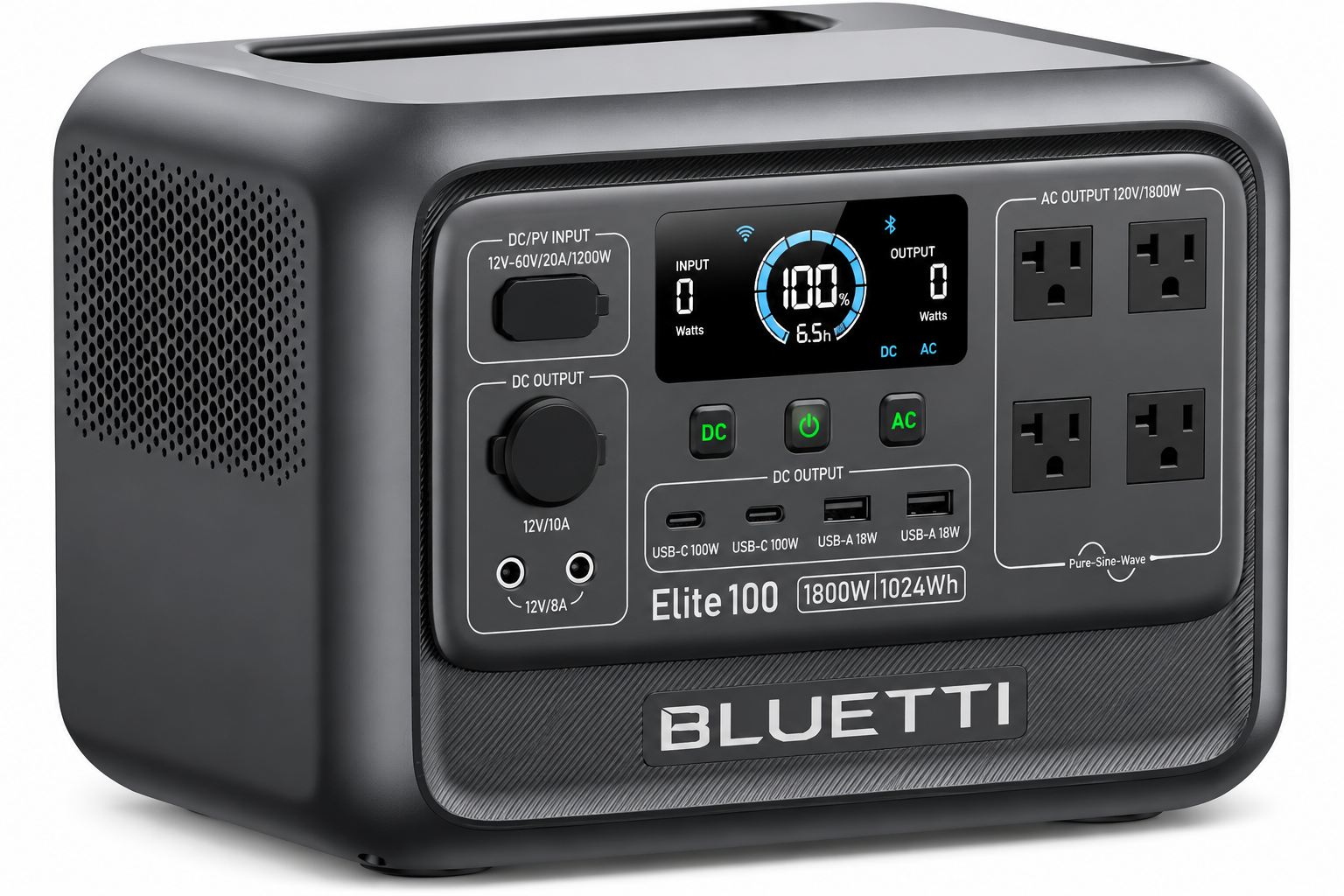
The BLUETTI Elite 100 V2 earns our Best Value pick by packing a 1,024Wh LiFePO4 battery and 1,800W AC output into a relatively compact power station at a competitive price. It provides enough capacity and output for many everyday backup-power and camping needs without requiring the larger investment of a high-capacity model.
Why we like it: The Elite 100 V2 offers a strong combination of useful capacity, 1,800W output, LiFePO4 battery chemistry, fast charging, and a compact design. When we checked Amazon, it also carried a substantial checkout promotion, making its feature set especially attractive for the money. Its 1,024Wh capacity puts it in the practical sweet spot for powering electronics, camping gear, and selected household essentials during shorter outages.
Keep in mind: The Elite 100 V2 offers less capacity and AC output than our larger home-backup picks, so it is better suited to selected essentials than extended heavy-duty use. Also, promotional pricing can change quickly, so its value advantage depends partly on the price available when you shop. Compare the current price before deciding which model gives you the best fit for your needs.
Check Price on AmazonBest Compact & Camping: Jackery Explorer 1000 v2
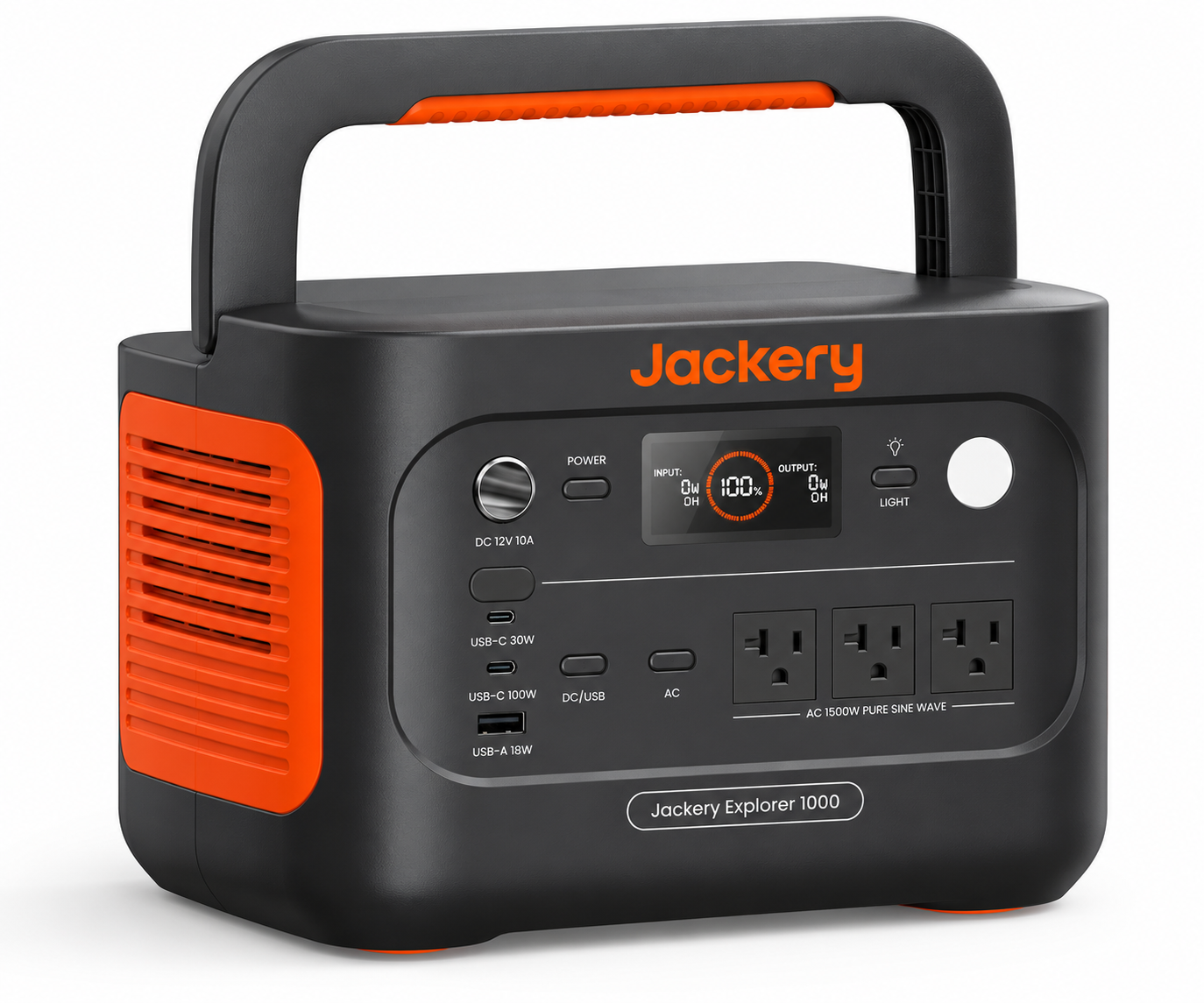
The Jackery Explorer 1000 v2 earns our Best Compact & Camping pick by combining a 1,070Wh LiFePO4 battery and 1,500W AC output with a design made to be easier to carry and use away from home. It offers enough capacity for camping equipment, portable refrigerators, lights, electronics, and many other essentials without moving into the size and weight of a larger home-backup power station.
Why we like it: Portability is where the Explorer 1000 v2 really earns its place in our lineup. It combines useful 1,070Wh capacity with a built-in carrying handle and relatively compact design, while still delivering 1,500W of AC output. Jackery also rates it for a full AC recharge in about one hour, making it convenient for camping trips, RV travel, emergency preparedness, or anyone who expects to move their power station regularly.
Keep in mind: The Explorer 1000 v2’s 1,500W AC output is lower than the higher-powered models in our lineup, so it may not be the best choice for running demanding appliances or several high-wattage devices at once. Its strength is portability and everyday versatility rather than maximum backup power, so shoppers preparing for longer outages may prefer one of our larger-capacity picks.
Check Price on AmazonBest High-Capacity: Jackery Explorer 2000 v2
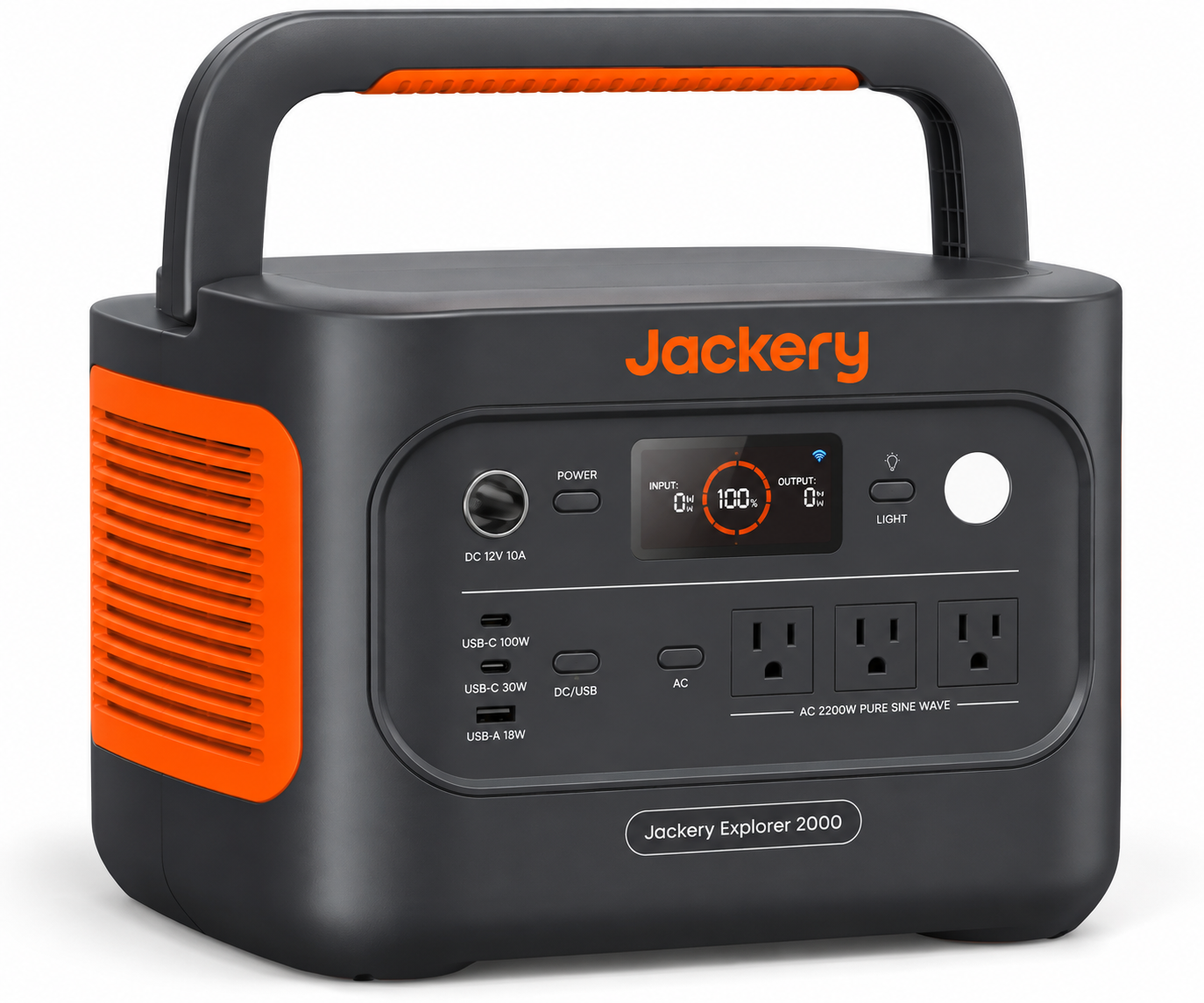
The Jackery Explorer 2000 v2 earns our Best High-Capacity pick with a 2,042Wh LiFePO4 battery and 2,200W AC output, giving it considerably more energy and power than the smaller portable models in our lineup. That makes it a strong choice for longer outages, RV use, and households that want to keep several important appliances and devices operating when utility power is unavailable.
Why we like it: The Explorer 2000 v2 gives you a meaningful step up in both capacity and output without moving into an enormous whole-home battery system. Its 2,042Wh capacity provides more flexibility for refrigerators, lights, electronics, and other outage essentials, while the 2,200W AC output allows it to handle more demanding equipment than our smaller picks. We also like that it supports solar charging, giving owners another way to replenish the battery during an extended outage or off-grid trip.
Keep in mind: The larger battery makes the Explorer 2000 v2 heavier and less convenient to carry than a 1,000Wh-class power station, and its higher purchase price may be unnecessary for shoppers who only need occasional backup for a few small devices. It is best suited to buyers who will actually benefit from the additional runtime and 2,200W output.
Check Price on AmazonHow We Chose the Best Portable Power Stations
We chose these portable power stations by comparing battery capacity, continuous AC output, battery chemistry, charging speed, portability, useful features, warranty coverage, independent testing, buyer feedback, and overall value. We also looked for meaningful differences between models rather than choosing five nearly identical power stations. That led us to picks ranging from a balanced all-around model and a compact camping option to larger systems better suited to home backup and extended power needs.
Because advertised capacity and real-world performance are not always identical, we gave extra weight to independent testing where available and considered how each model is likely to be used in everyday situations. We also checked current Amazon listings for availability, buyer ratings, and recent purchasing activity, while recognizing that prices and promotions can change over time.
What to Look For in a Portable Power Station
Battery Capacity (Wh)
Battery capacity is measured in watt-hours (Wh) and tells you roughly how much energy a power station can store. A 2,000Wh model can generally run the same equipment longer than a 1,000Wh model, although actual runtime depends on the device being powered and energy lost during conversion. Think about what you want to keep running—and for how long—rather than simply buying the largest battery available.
AC Output (Watts)
AC output tells you how much power the station can continuously supply to connected devices. A higher watt rating allows you to run more demanding appliances or several devices at the same time. Pay attention to the continuous output rating rather than relying only on an advertised surge or peak number, since continuous wattage is the better guide to what the power station can handle during normal use.
Battery Chemistry and Lifespan
Many newer portable power stations use lithium iron phosphate (LiFePO4) batteries. Compared with older lithium-ion chemistries commonly used in portable power products, LiFePO4 batteries are valued for their long cycle life, thermal stability, and ability to retain useful capacity through many charge-and-discharge cycles. When comparing models, check the manufacturer’s rated cycle life as well as the warranty rather than judging battery longevity by capacity alone.
Charging Speed and Solar Charging
Recharge time can matter just as much as battery capacity, especially during an outage when electricity may only return briefly. Compare AC charging times and check whether faster charging requires a special mode or app setting. If you plan to use solar panels, also check the power station’s maximum solar input and compatible voltage range—simply owning a large solar panel does not mean the station can accept all of its output.
Size, Weight, and Portability
More capacity usually means more weight, so consider how often you expect to move the power station. A lighter 1,000Wh-class model may be easier to carry for camping, RV trips, or moving between rooms, while a larger 2,000Wh-class unit may make more sense when longer backup runtime matters more than portability. Check the actual weight and dimensions before buying, and think about where you will store and use it.
Think About What You Need to Power
Before choosing among the best portable power stations, make a short list of the devices you would actually want to run during an outage or trip. A phone, laptop, lights, and internet equipment require far less power than a refrigerator, microwave, space heater, or other high-wattage appliance. Check each device’s wattage and remember that some appliances briefly draw extra power when starting. Matching the power station to your real needs can save you from buying too little capacity—or paying for far more than you will use.