
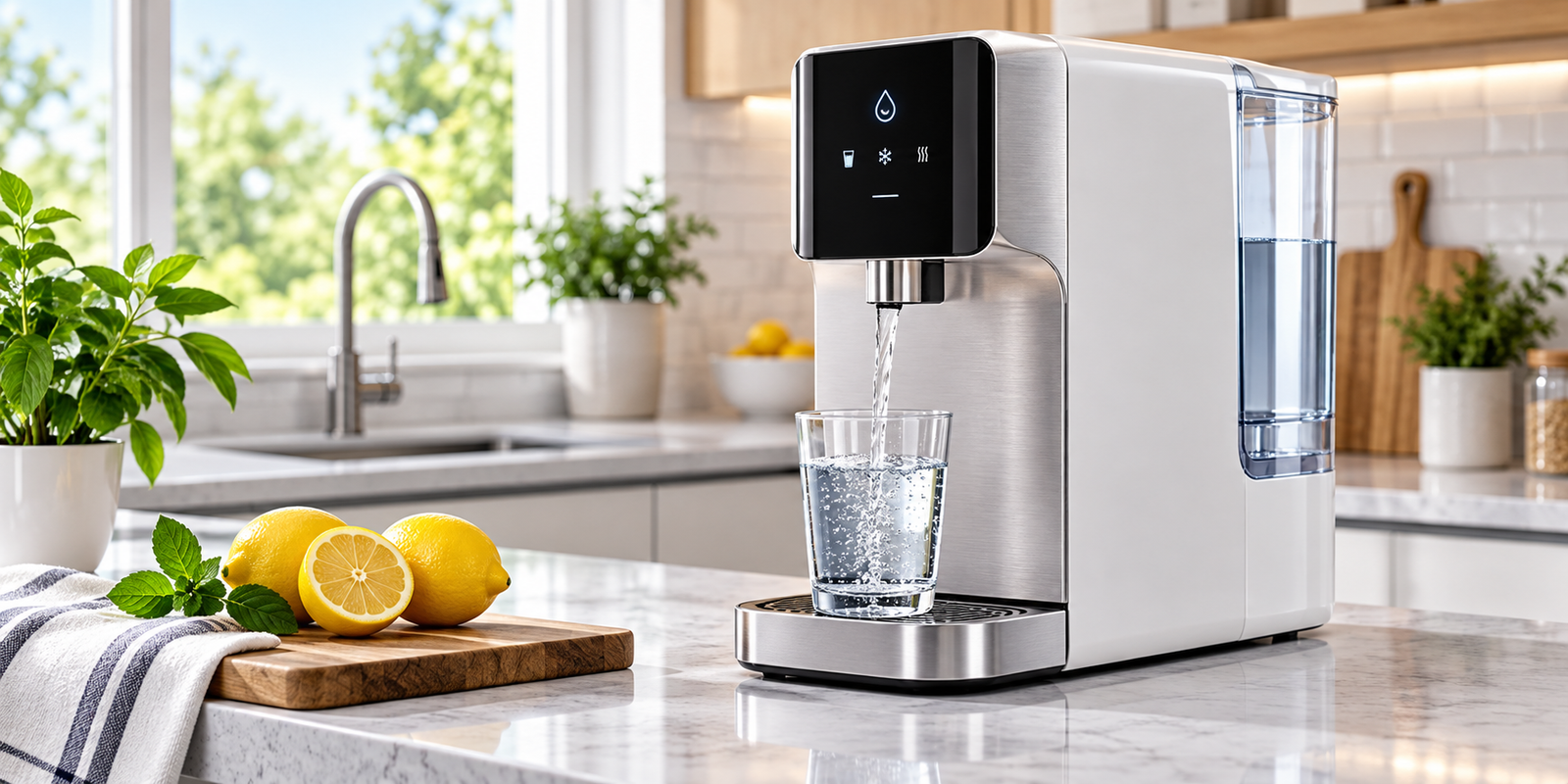
Choosing among the best countertop reverse osmosis systems can be confusing, especially with so many filtration stages, features, and price points to compare. We researched popular countertop RO systems for filtration performance, ease of use, convenience, portability, buyer feedback, and overall value. From simple no-installation systems to models with hot and cold water dispensing, these five VeraSort picks offer strong options for different homes, needs, and budgets. Many shoppers simply call these countertop water filters, drinking water filters, or water filtration systems, even when they are specifically looking for reverse osmosis technology. These countertop RO systems offer a convenient alternative for people searching for filtered drinking water without installing an under-sink system.
Our Best Countertop Reverse Osmosis System Picks for 2026
Best Overall: AquaTru Carafe
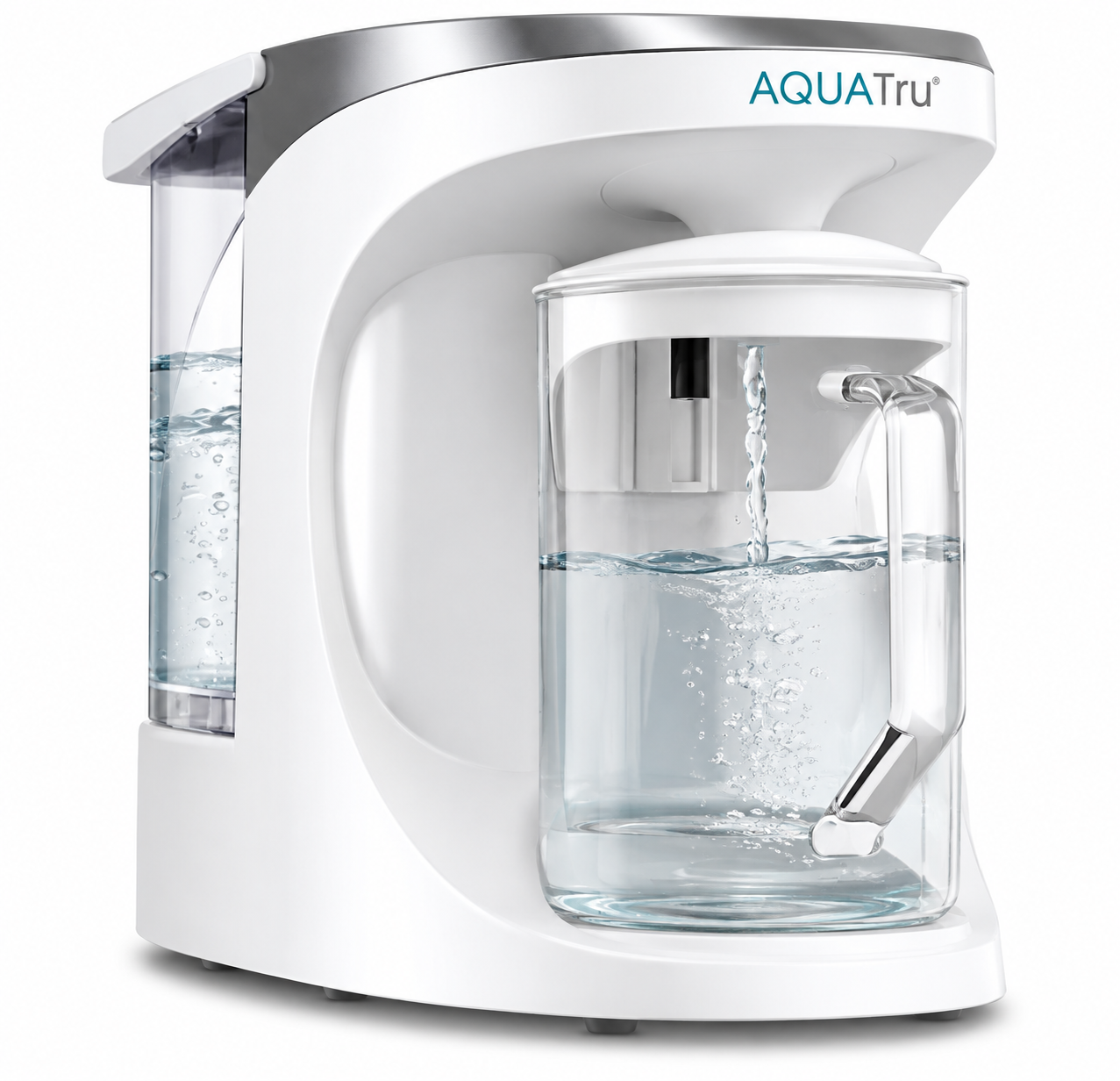
The AquaTru Carafe is our Best Overall pick for shoppers who want serious reverse osmosis filtration without installing anything under the sink. Its countertop design uses a removable tap-water tank and dispenses filtered water directly into a glass carafe, making it convenient for everyday drinking water.
Why we like it: AquaTru combines four-stage reverse osmosis filtration with independently certified contaminant-reduction claims in an easy-to-use countertop system. The removable glass carafe is a particularly nice touch—you can carry it directly to the table or place it in the refrigerator rather than filling individual glasses at the machine. No plumbing or permanent installation is required.
Keep in mind: At around $375 when we checked it, the AquaTru Carafe costs considerably more than some countertop RO systems. It also doesn’t offer conveniences such as instant hot or chilled water. What you’re primarily paying for is the filtration system, certification credentials, and simple carafe-based design.
Check Price on AmazonBest for Remineralization: Bluevua RO100ROPOT-UV
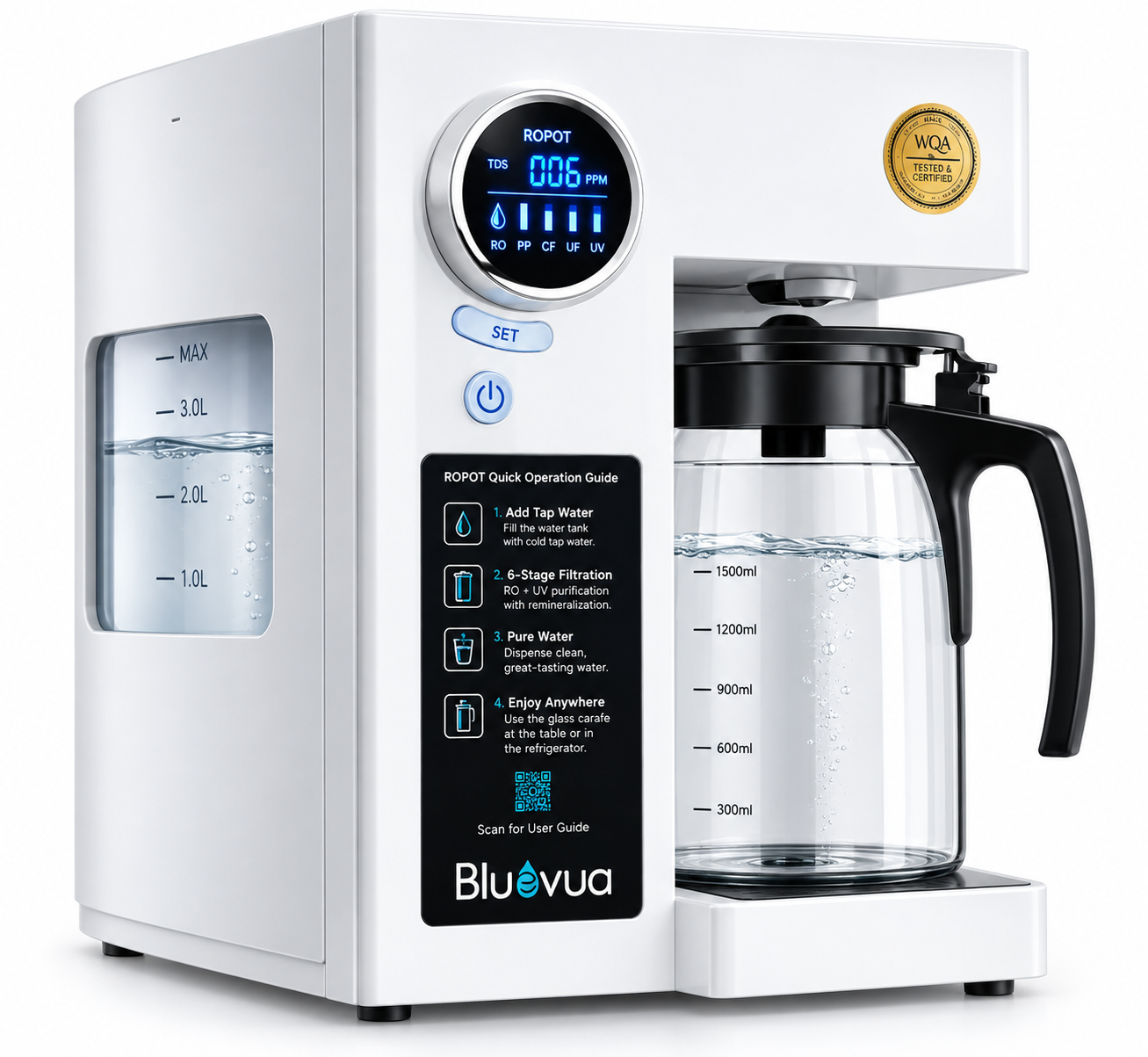
The Bluevua RO100ROPOT-UV is our Best for Remineralization pick for shoppers who want reverse osmosis filtration but prefer minerals to be added back to the filtered water. This countertop system requires no plumbing and combines six-stage filtration with UV treatment and a removable glass carafe.
Why we like it: The remineralization stage is the standout feature, adding minerals back after the reverse osmosis process. We also like the combination of UV treatment, a built-in TDS display, and the glass carafe. With no permanent installation required, it offers quite a few filtration features in a countertop design.
Keep in mind: At about $409 when we checked it, this is one of the more expensive systems in our lineup. It’s also a fairly substantial countertop appliance, so shoppers with limited counter space may prefer a smaller model. For buyers who specifically want remineralization along with UV and RO filtration, however, the extra features help distinguish it from simpler systems.
Check Price on AmazonBest Hot & Cold: iSpring RCD100HCG
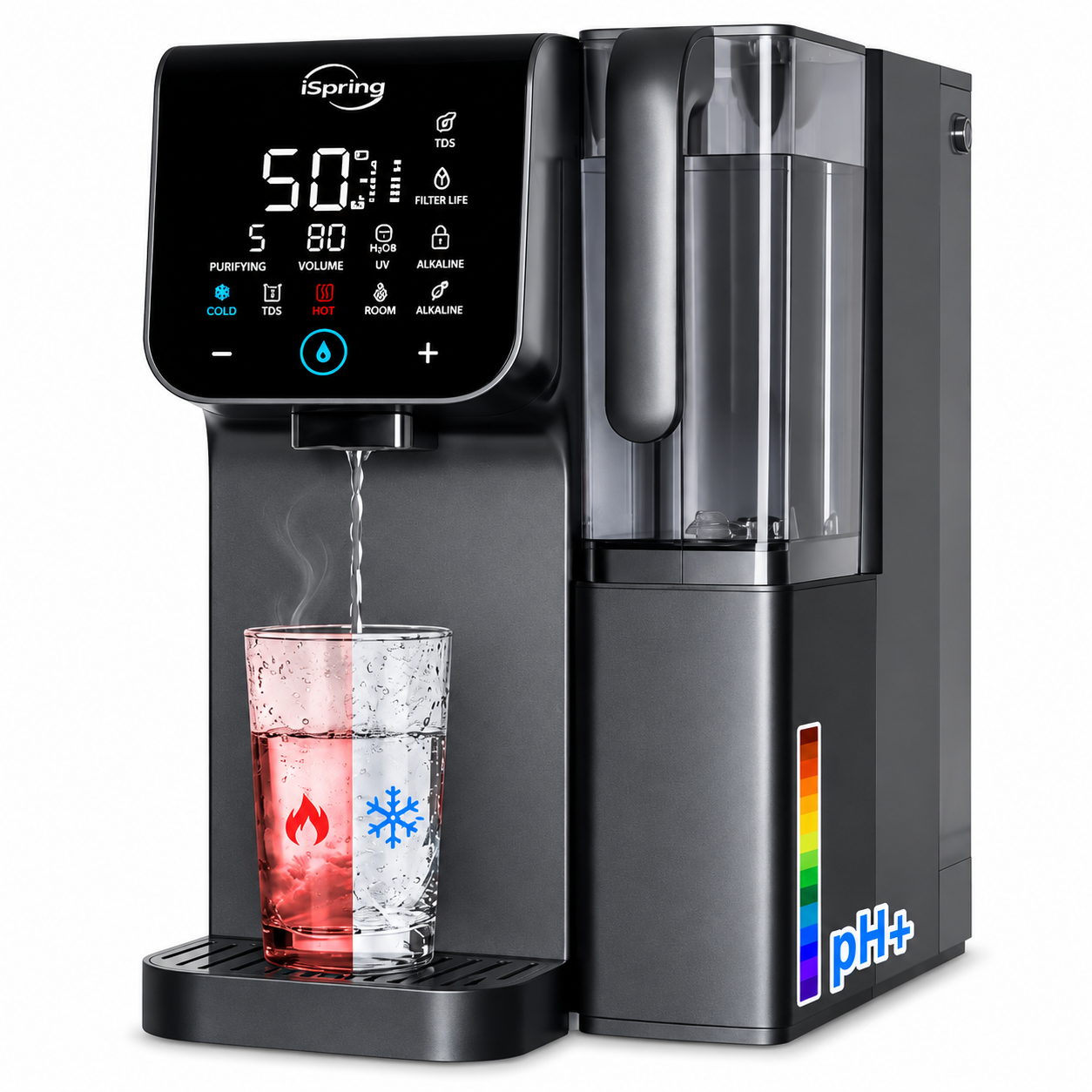
The iSpring RCD100HCG is our Best Hot & Cold pick for shoppers who want reverse osmosis filtration and the convenience of temperature-controlled water from one countertop appliance. Its plug-and-play design combines RO filtration with alkaline remineralization and lets you dispense hot, cold, or room-temperature water without an under-sink installation.
Why we like it: Convenience is the big attraction here. The iSpring offers nine temperature settings and six dispensing-volume options, along with a built-in TDS display and filter-life monitor. That flexibility makes it useful for everything from a cold glass of water to hot water for tea or other drinks, while the alkaline stage adds minerals back after reverse osmosis filtration.
Keep in mind: At about $600 when we checked it, the iSpring is the most expensive system in our five picks, and its larger design will require a reasonable amount of counter space. Buyers who only want filtered room-temperature water can spend considerably less. But for someone who will regularly use both hot and chilled water, its extra convenience may justify the premium.
Check Price on AmazonBest Value: DREO Countertop Reverse Osmosis Water Filter
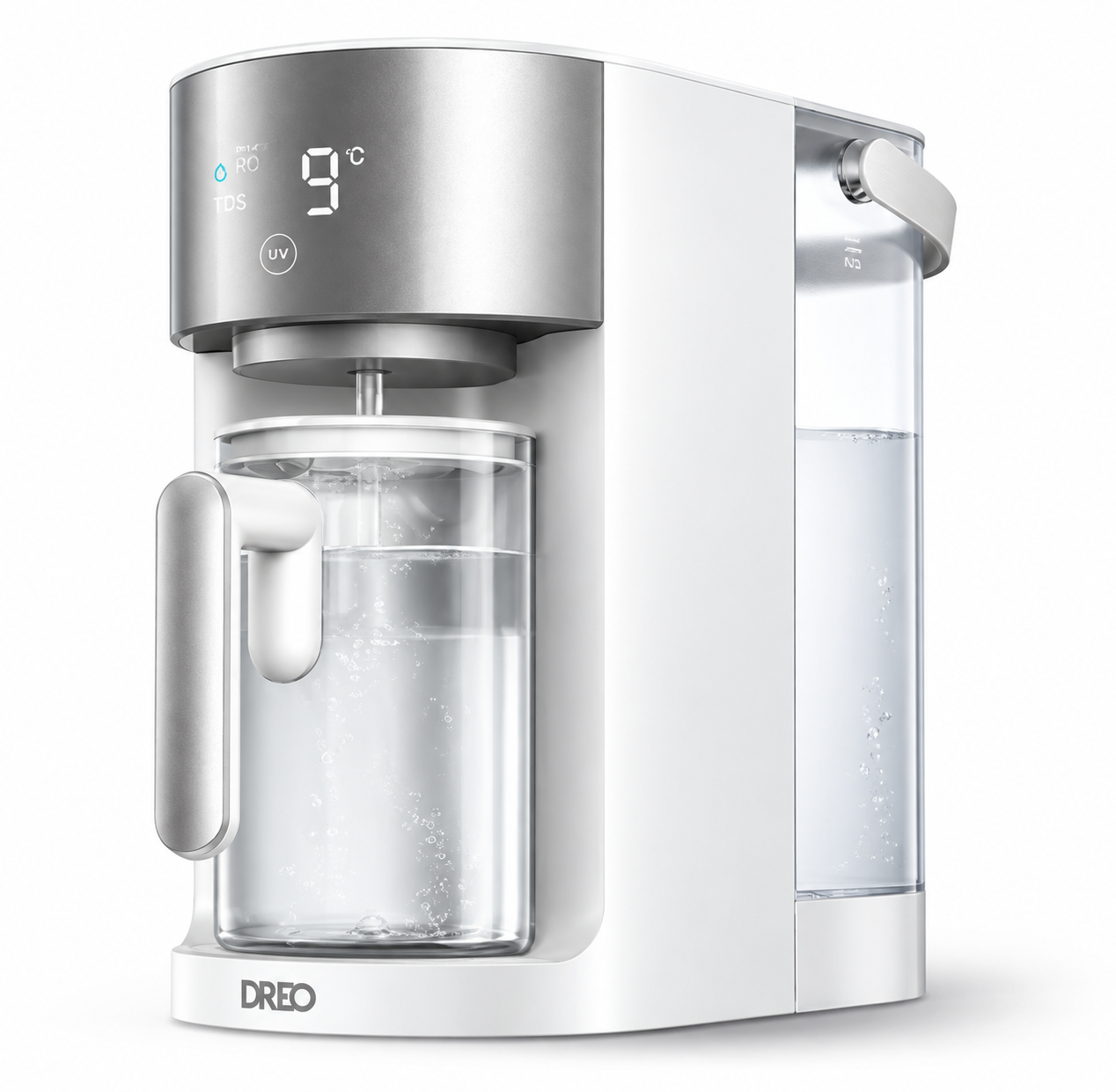
The DREO Countertop Reverse Osmosis Water Filter is our Best Value pick because it delivers the core conveniences most shoppers want at a much lower price than several premium countertop systems. Its installation-free design combines RO filtration with an autofill pitcher, TDS and filter-life monitoring, and a self-cleaning function.
Why we like it: Value is the standout here. At about $153 when we checked it, the DREO cost less than half as much as several systems in our lineup, yet it still offers useful features such as an autofill pitcher and water-quality monitoring. Its 3:1 pure-to-drain ratio is another practical feature, and the removable pitcher makes it easy to carry filtered water to the table or refrigerator.
Keep in mind: The DREO is a more straightforward system than our premium picks. It doesn’t provide the hot-and-cold dispensing of the iSpring or the same feature set as some higher-priced models. But shoppers primarily looking for countertop RO filtration, convenience, and a lower purchase price may find that simplicity to be part of its appeal.
Check Price on AmazonBest Compact & Portable: Bluevua RO100ROPOT-Travel
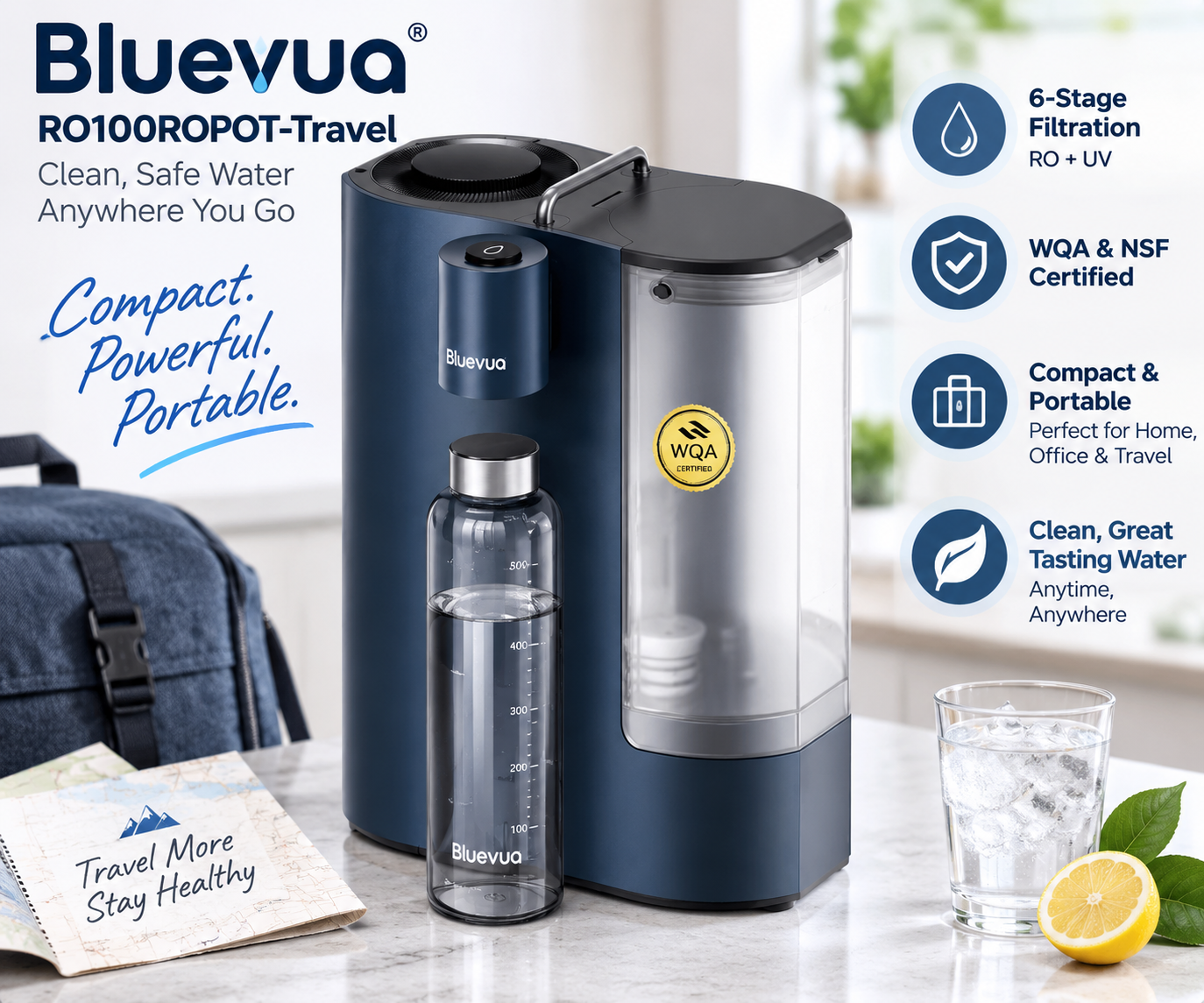
The Bluevua RO100ROPOT-Travel is our Best Compact & Portable pick for shoppers who want reverse osmosis filtration without giving up much counter space. Its narrow design combines six-stage filtration with UV treatment and dispenses filtered water into a reusable glass bottle, making it especially convenient for smaller kitchens, offices, RVs, and travel.
Why we like it: Portability is the standout feature. At roughly 10 inches long, 5 inches wide, and 13.5 inches high, the RO100ROPOT-Travel takes up considerably less counter space than many countertop RO systems. We also like the combination of RO and UV treatment, simple no-plumbing setup, and reusable bottle that can go with you after filtering.
Keep in mind: The compact size also means this isn’t designed for producing large quantities of filtered water as conveniently as a full-size countertop system. Larger households or heavy water users may prefer one of our bigger picks. But for one or two people, limited counter space, or portability, its small footprint is a major advantage.
Check Price on AmazonHow We Chose the Best Countertop Reverse Osmosis Systems
When choosing the best countertop reverse osmosis systems, we compared filtration design, independent certification and testing information where available, ease of use, installation requirements, capacity, countertop footprint, special features, buyer feedback, and overall value. We also looked for meaningful differences between models rather than simply choosing five similar machines. That led us to picks ranging from a straightforward Best Overall system to options emphasizing remineralization, hot and cold dispensing, value, and portability.
Because water-filtration claims can be confusing, we gave particular attention to how manufacturers describe certifications and contaminant-reduction performance. We avoided treating every testing claim as equivalent to independent certification and focused on practical features that can help shoppers choose a system suited to their household and budget.
What to Look For in a Countertop Reverse Osmosis System
Filtration and certification: Look beyond the number of filtration stages. More stages do not automatically mean better performance. Check whether the manufacturer provides independent certification or testing information for the contaminants you are concerned about, and pay attention to the specific standards and reduction claims rather than broad statements such as “purifies water.”
Counter space and capacity: Countertop RO systems vary considerably in size. Measure the space where you plan to use the machine, including clearance for removing or refilling the water tank. Larger reservoirs can be more convenient for families, while compact models may make more sense for smaller kitchens or one- and two-person households.
Water temperature and extra features: Some systems simply dispense filtered room-temperature water, while others offer chilled or hot water, remineralization, UV treatment, TDS monitoring, filter-life indicators, or automatic dispensing. Decide which features you will actually use before paying extra for them.
Wastewater ratio: Reverse osmosis produces some wastewater as part of the filtration process. Compare the manufacturer’s pure-water-to-drain-water ratio when available; more efficient systems can reduce the amount of water sent to the drain or wastewater tank.
Filter replacement costs: The purchase price is only part of the long-term cost. Check how many replacement filters the system uses, their expected service life, and what replacements typically cost. A less expensive machine can become costly over time if its filters need frequent replacement.
Ease of use: One advantage of countertop RO systems is that most require no permanent plumbing. Still, consider how easy the reservoir is to fill, how often it needs attention, whether the filtered-water container is removable, and how simple routine cleaning and filter changes appear to be.